
Home › Projects ›Filter & Guard Installation › Toano, VA — Gutter Guard Filter Correction
Gutter Guard Filter Installation Correction — Toano, Virginia
The previous contractor left gutter guard filters with excess overhang past the gutter edge, large open gaps at joints, and silicone caulk used to hide the problem. We removed everything, corrected every section, and reinstalled the filters properly — flush, tight, and built to last.
Toano, VA
Project location
Same day
Full completion
3 defects
Documented & corrected
0 gaps
At joints after reinstall
Correct gutter guard filter installation depends entirely on two things: precise length so the filter sits flush within the gutter channel, and tight continuous joints so no section of your roofline is exposed. When this homeowner in Toano, Virginia contacted Gutter Masters Pro, both of those fundamentals had been ignored by the previous installer. What we found was a roofline covered in filters that overhung the gutter edge, joints left with visible gaps, and — most telling — silicone caulk applied inside the gutter to mask the gaps rather than fix them.
This project page documents exactly what we found, why each defect matters, and how our team corrected every section to the right standard. We include real before-and-after photos from the job so you can see the difference for yourself.
What we found: silicone used to hide a gutter filter gap
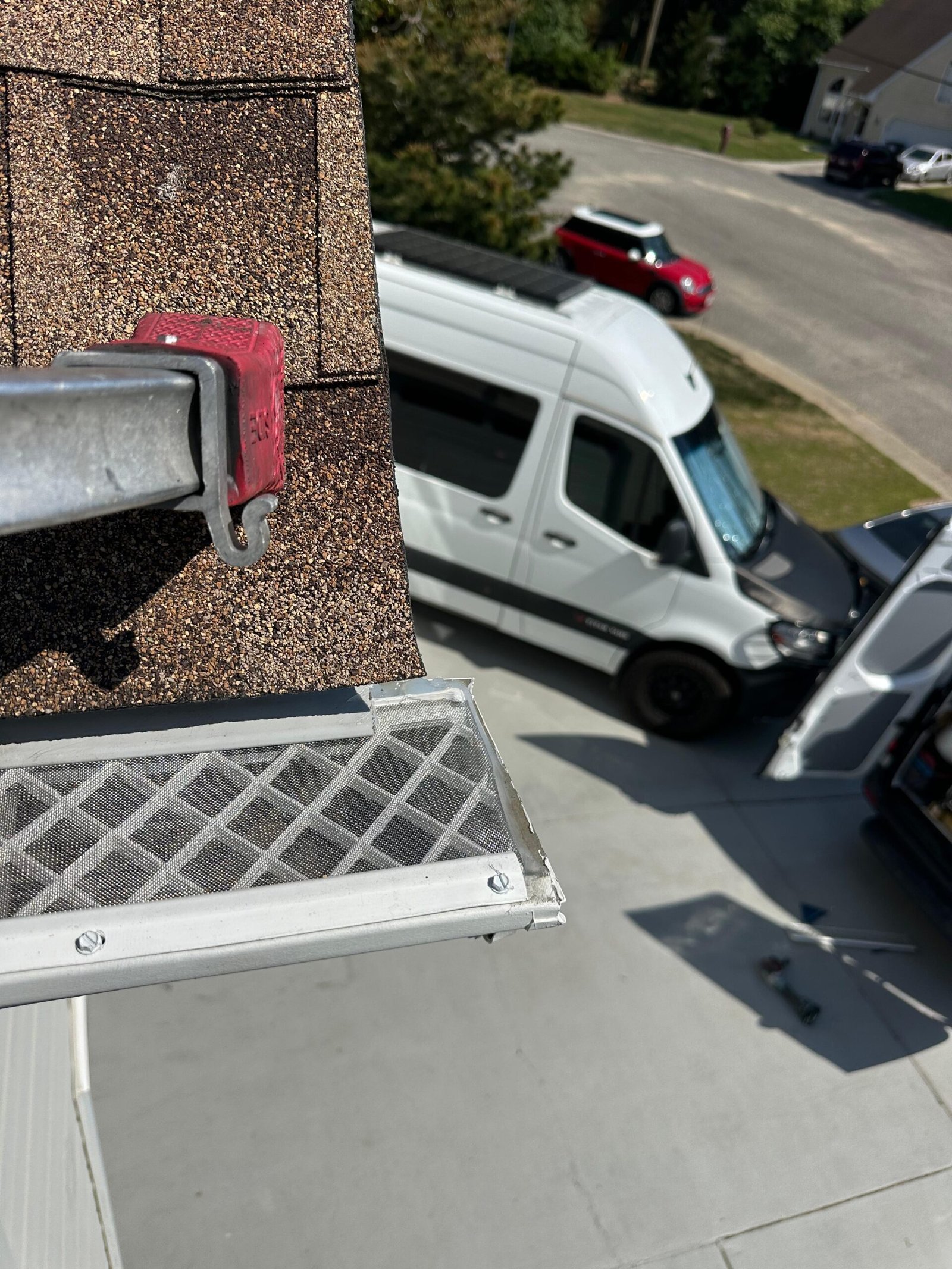
The most concerning defect on this job was discovered at the gutter corner — the previous installer had filled a gap between the gutter filter and the gutter channel with silicone caulk. This is a red flag. Silicone is not a correction; it’s a concealment. It breaks down with UV exposure and thermal cycling, holds debris, and does nothing to fix the underlying fit problem that created the gap.
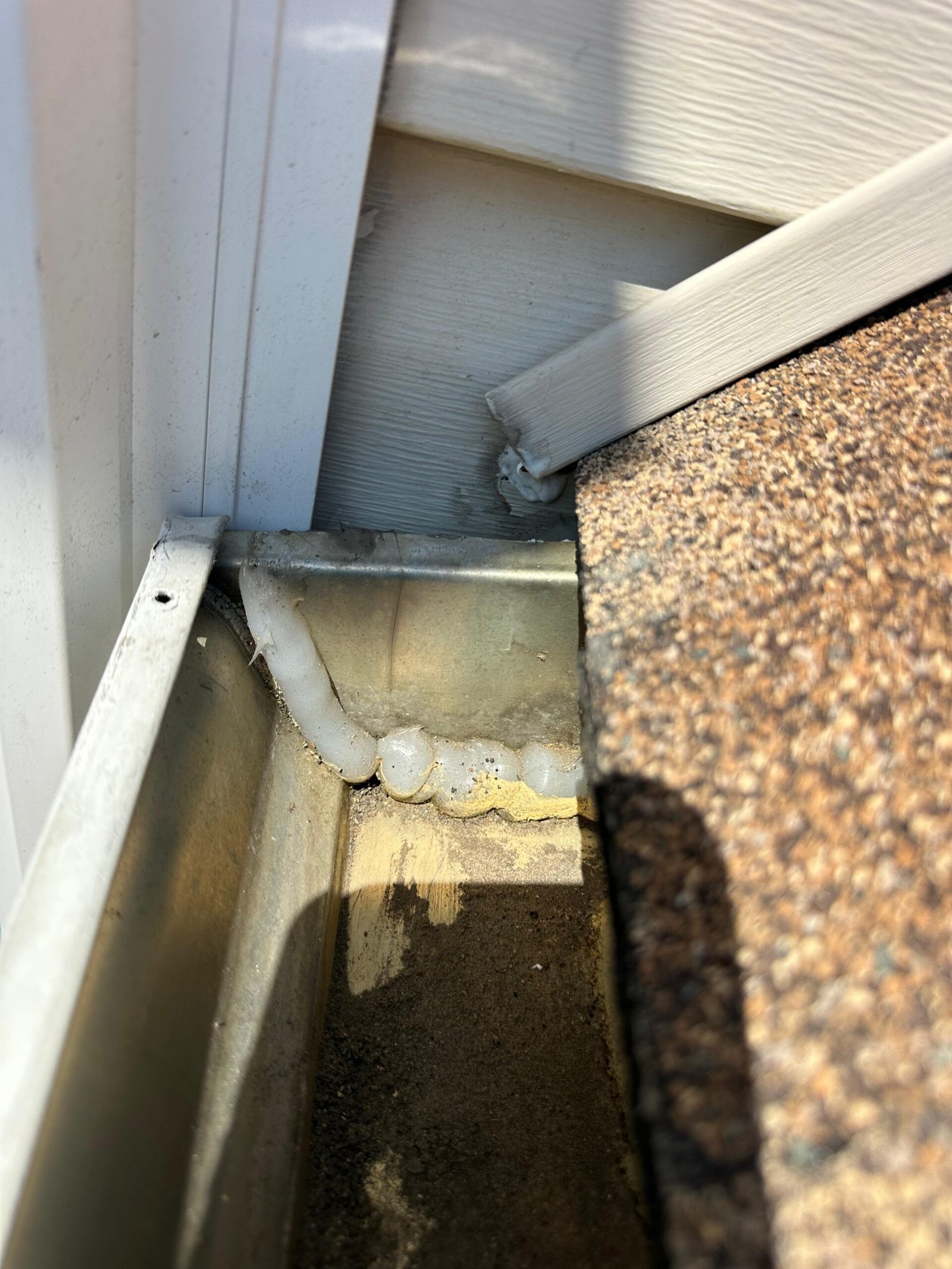
Open joint gap — filter sections left unconnected
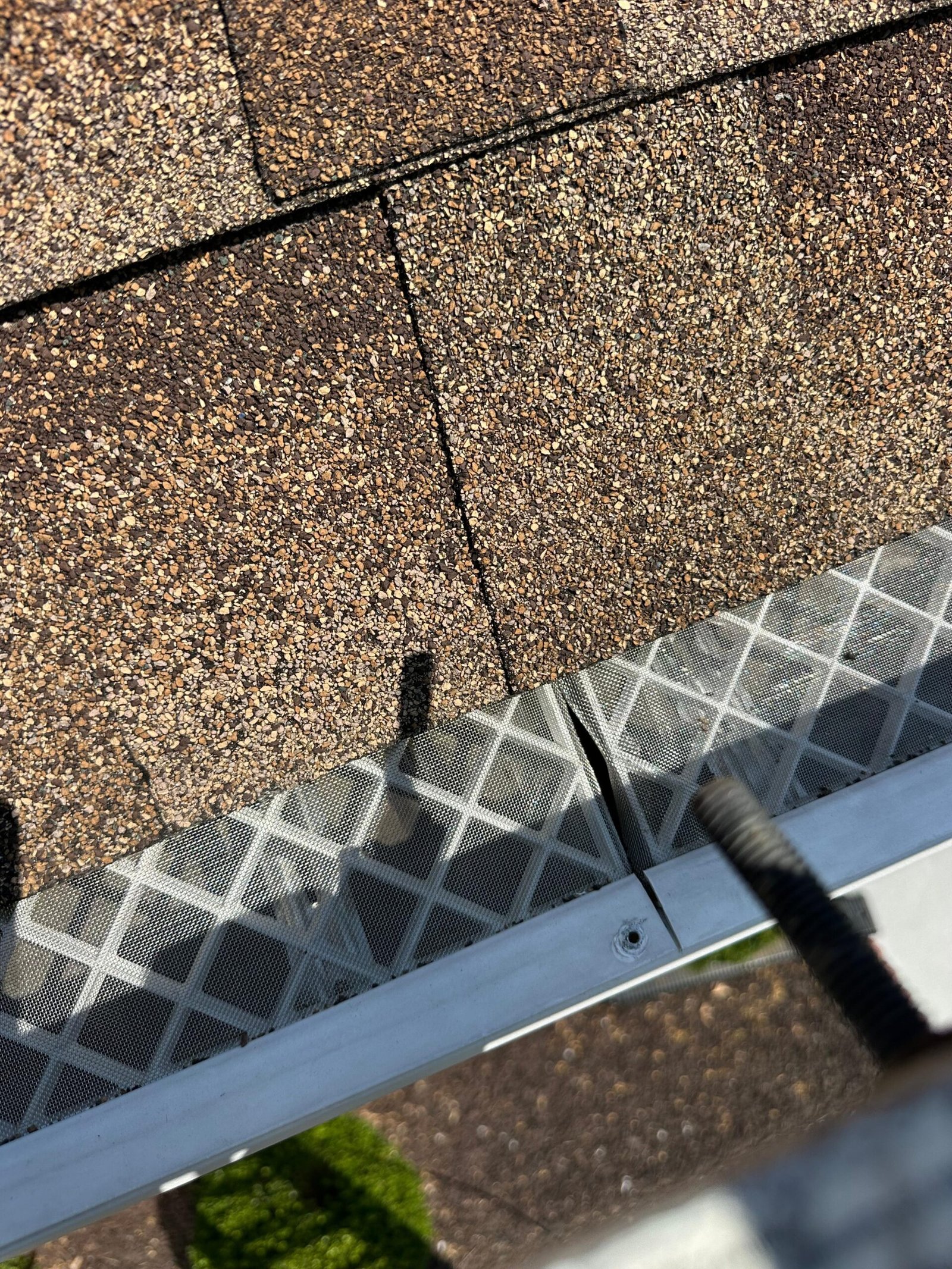
Across the roofline, wherever two filter sections met, the previous installer had left a visible, open gap. In the photo below you can see the split between sections — daylight visible through the joint, which means debris, seeds, and roof grit have a direct path into the gutter channel below.
The three defects we documented and corrected
Across the roofline, wherever two filter sections met, the previous installer had left a visible, open gap. In the photo below you can see the split between sections — daylight visible through the joint, which means debris, seeds, and roof grit have a direct path into the gutter channel below.
✗
Silicone-patched gaps at gutter corners: Instead of cutting and fitting filter sections properly, the previous installer applied silicone caulk to bridge the gap between the filter frame and the gutter. This degrades outdoors and is not an accepted installation method for any gutter guard product.
✗
Open gaps at filter joints: Where filter sections met, they were simply butted together without proper overlap — or not connected at all. Each gap is a direct entry point for leaves, twigs, seed pods, and the granule debris that washes off asphalt shingles.
✗
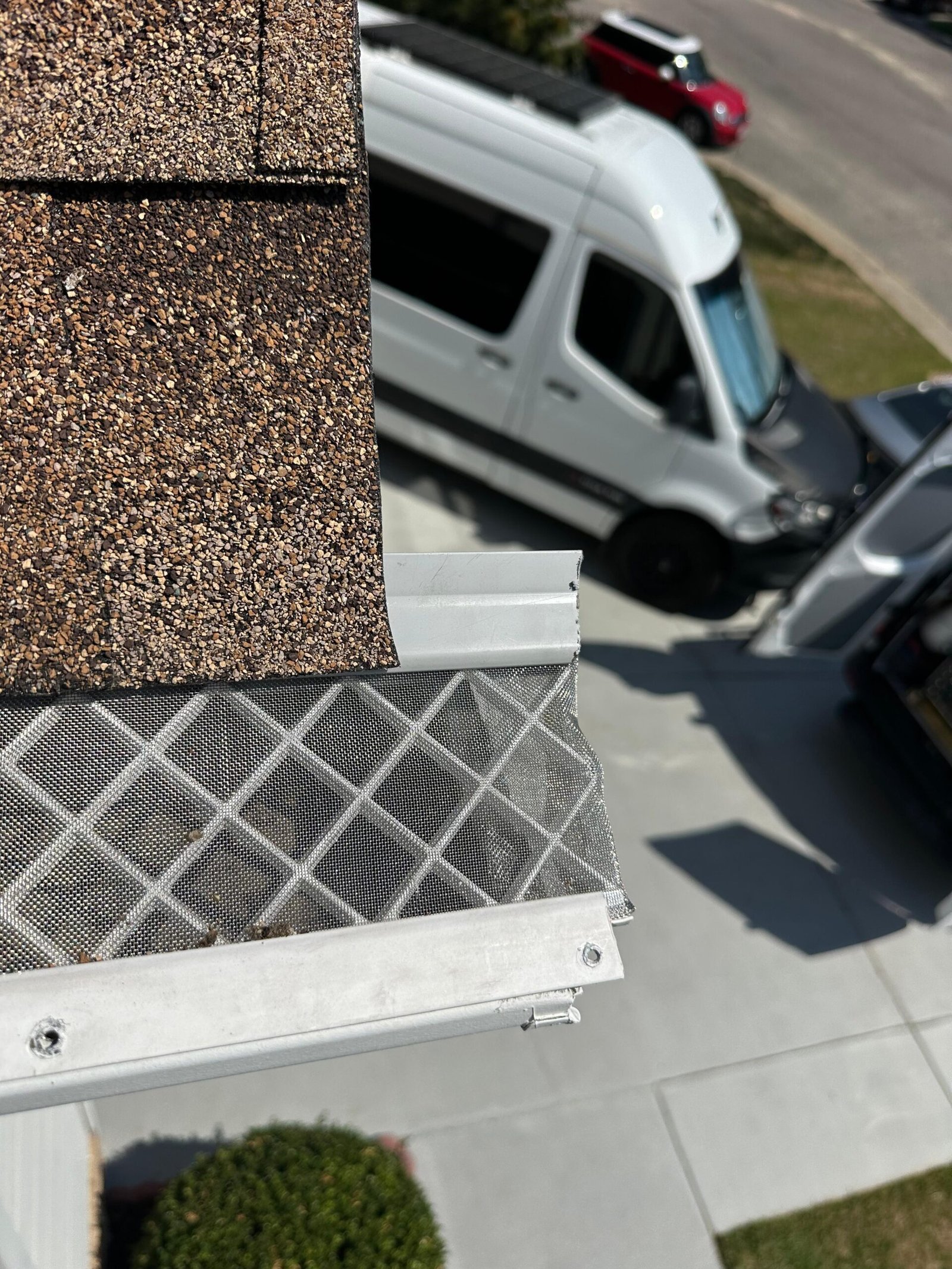
Excess filter length past the gutter edge: Multiple sections were left with material hanging past the outer lip of the gutter. This means the filter was never seated properly inside the channel, which also means rain water running off the roof can overshoot the gutter entirely at those sections.
After: gutter guard filter installation done correctly
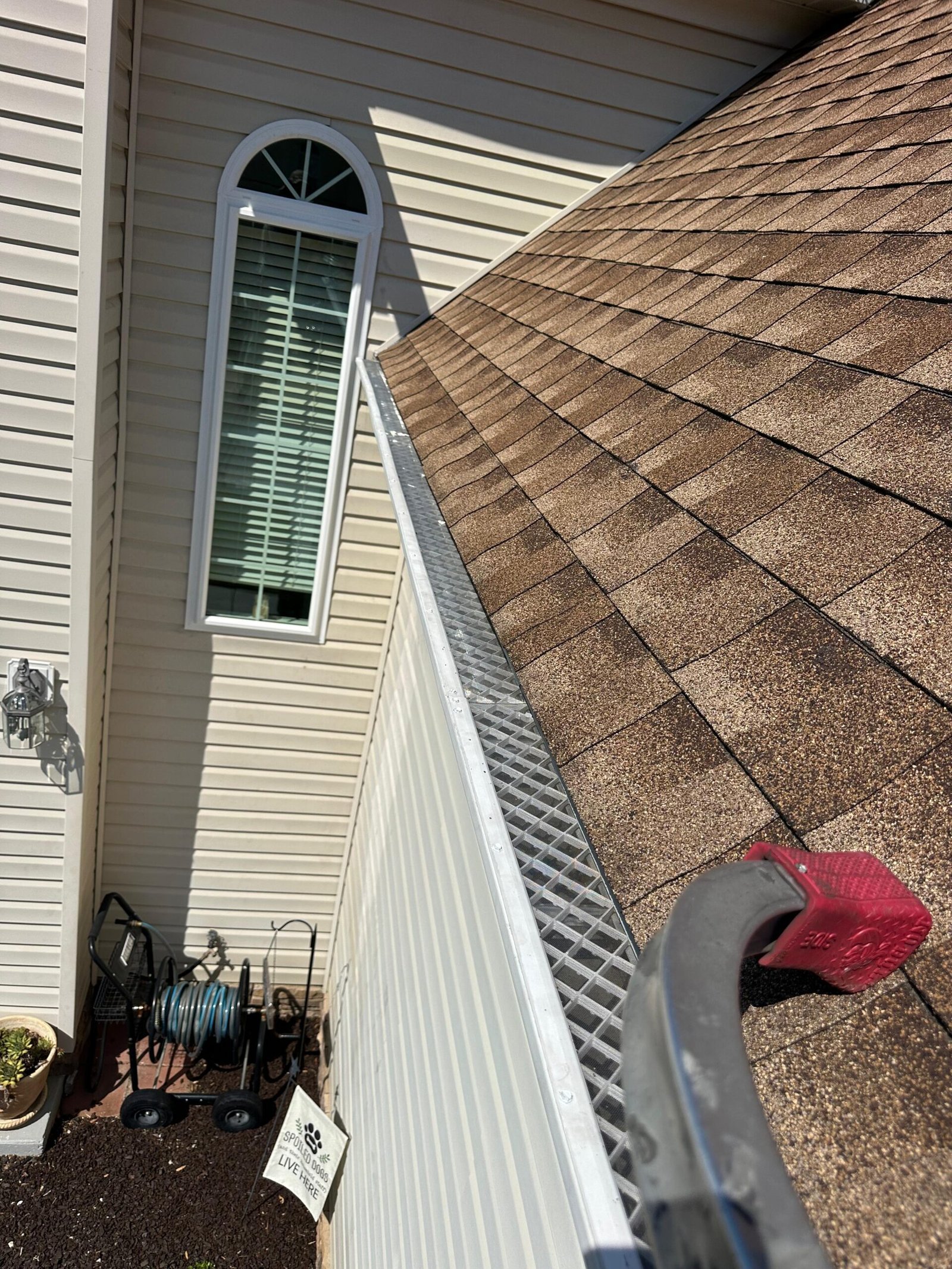
Once we removed all the faulty filter sections, cleared debris from the gutters, and re-measured every run, we reinstalled fresh sections cut precisely to fit. The after photo shows a uniform, continuous roofline — every filter seated flush within the gutter channel, every joint tight, and the outer edge clean and even with no overhang.
Our gutter guard filter installation process
Whether we’re installing new filters or correcting someone else’s work, every gutter guard filter installation we perform follows the same documented process. There are no shortcuts.
✓
Full roofline documentation: Before touching anything, we walk the entire perimeter and photograph every section — including defects the homeowner may not have noticed. This is how we found the silicone patch in Toano before the homeowner even knew it was there.
✓
Complete removal of all faulty material: We don’t patch over bad work. Every incorrectly installed section was removed. Gutters were cleared of any debris that had already entered through the gaps.
✓
Precise section cutting: Each filter section is measured and cut to terminate at the inner edge of the gutter lip — no overhang, no short cuts that create gaps at the joint.
✓
Proper joint overlap: Where sections meet, we use the correct overlap length and ensure both sections are fully seated against the fascia and under the shingle edge before moving to the next run.
✓
Final walk-through with photos: We document the finished installation from the same angles as the before photos. You get a visual record of the correction — not just our word for it.
A note on gutter guard filter installation in Virginia’s climate: Hampton Roads and surrounding areas like Toano and James City County deal with heavy oak and pine tree cover, high-velocity summer storms, and freeze-thaw cycles in winter. Filter sections that aren’t cut and seated correctly will work loose faster here than in drier climates. Getting the fit right on day one is not a luxury — it’s the only way the installation holds through a full Virginia storm season.
Frequently asked questions about gutter guard filter installation
Look for filter material extending past the outer gutter edge, visible daylight at the joints where sections meet, silicone or caulk anywhere inside or around the filter, sections that flex or lift when you push them, or debris accumulating inside your gutters despite having guards installed. Any single one of these is worth a professional inspection.
Almost always because the filter section was cut too short or didn’t fit correctly, and the installer tried to hide the gap rather than recut the section. It’s a shortcut that fails within a few seasons. If you see caulk inside or under your gutter guard filters, the installation should be inspected by an independent contractor.
Yes. Gaps allow debris to enter the gutter and clog the downspout. A clogged downspout means water backs up and overflows, which can saturate the fascia board (leading to rot), flow behind the siding, or pool against the foundation. In Virginia Beach-area homes, foundation drainage issues are one of the most common consequences of gutter system failures.
Yes — this Toano project is exactly that scenario. We assess the full roofline, document every defect with photos, remove all faulty material, and reinstall to the correct spec. We don’t patch over existing problems. Call us at (757) 701-2055 for a free inspection.
We serve all of James City County including Toano and Williamsburg, as well as the broader Hampton Roads area: Hampton, Norfolk, Virginia Beach, Chesapeake, Newport News, and surrounding communities. See our Hampton service area page for the full coverage map.
Related services & pages on this site
Need gutter guard filter installation or correction in your area?
We serve Toano, Williamsburg, Hampton, Norfolk, Virginia Beach, and all of Hampton Roads. Free inspection — no obligation.