
Best Gutter Material for Weather Resistance in Coastal Virginia
- By Gutter Masters Pro
- Local Hampton Roads Experts
- 87min read
- August 2026

Why Material Choice Matters Near the Coast
Gutters in Hampton Roads deal with a rougher environment than gutters almost anywhere inland. It’s not just rain — it’s what’s mixed into the air and what shows up during storm season:
- Salt spray from the Chesapeake Bay and Atlantic accelerates rust and corrosion on unprotected metal
- High humidity keeps materials damp longer, which speeds up wear on anything prone to rot or rust
- Heavy, wind-driven storms put real stress on hangers, seams, and joints
- Hot summers and mild-but-real winter cold snaps cause materials to expand and contract, which is hard on anything brittle
A material that performs fine in a drier, inland climate can fail years earlier out here. That’s the whole reason this comparison matters — the “best” gutter material really depends on where the house sits.

Gutter Material Comparison at a Glance
Here’s how the five most common gutter materials stack up for coastal Virginia conditions specifically:
| Material | Salt-Air Resistance | Typical Lifespan | Upfront Cost | Maintenance |
|---|---|---|---|---|
| Seamless Aluminum | Strong — won’t rust | Often 20+ years, well maintained | Moderate | Low |
| Vinyl | Good — no corrosion | 10–15 years | Low | Low, but brittle in cold |
| Galvanized Steel | Weak — coating wears through | 15–20 years | Moderate | Higher |
| Copper | Excellent — self-protecting patina | 50+ years | High | Very low |
| Zinc | Excellent | 40–50+ years | High | Very low |
Lifespan ranges are general industry figures, not guarantees — actual performance depends on installation quality, slope, and how consistently the gutters are maintained.
Not sure which option fits your home?
We’ll take a look at your roofline and give you an honest read on what makes sense — DIY-friendly or not.
A Closer Look at Each Material
Most common choice locally
Seamless Aluminum
Aluminum doesn’t rust, which immediately rules out the biggest coastal weather problem. Because it’s custom-extruded on-site into one continuous piece, there are no joints for salt-laden moisture to work into over time — which is also why it holds up so well against wind-driven storms. It’s lightweight, easy to paint or coat to match any trim color, and priced in the middle of the pack. The tradeoff: it can dent under a hard, direct impact, though this is uncommon in normal use.
Budget-friendly option
Vinyl
Vinyl won’t corrode, and it’s the least expensive option upfront, which makes it tempting. The catch in this climate is temperature swings — vinyl gets brittle in a cold snap and can crack under the weight of storm debris or a ladder. It also tends to sag over a shorter timeframe than metal options, especially on longer runs.
Needs a protective coating
Galvanized Steel
Steel is strong and dent-resistant, which sounds great until you factor in salt air. The zinc coating that protects it from rust wears down faster near the coast, and once it’s compromised, rust spreads quickly. Steel can work well inland, but along the Bay it typically needs more frequent inspection and maintenance than aluminum.
Premium, long-term investment
Copper
Copper develops a protective patina that essentially stops corrosion in its tracks, and a well-installed copper system can genuinely outlast the house. It’s also strikingly good-looking, which is why it’s popular on historic homes. The tradeoff is cost — copper runs several times the price of aluminum, so it’s usually a choice driven by aesthetics or a historic-preservation requirement rather than pure practicality.
Premium, long-term investment
Zinc
Zinc behaves similarly to copper — excellent corrosion resistance, a long service life, and a distinctive weathered look that some homeowners prefer. It comes with a comparable price tag to copper, which puts it out of reach for most standard residential budgets, but it’s a legitimate option if long-term performance and appearance matter more than upfront cost.
Frequently Asked Questions About Gutter Material
Seamless aluminum is generally the most practical choice — it resists salt-air corrosion far better than uncoated steel and costs much less than copper or zinc.
Vinyl resists rust and salt corrosion, but it becomes brittle in cold snaps and can sag or crack under heavy storm debris and summer heat over time.
With proper installation, correct slope, and regular cleaning, many seamless aluminum systems in Hampton Roads keep performing well for 20 years or more — though salt exposure and maintenance habits affect the actual lifespan.
Copper and zinc are extremely durable and develop a protective patina, but the high upfront cost is usually hard to justify unless the look or a historic-home requirement is a priority.
No. Even the best material will fail early if it’s clogged, poorly pitched, or never inspected — maintenance is what actually determines how long any gutter system lasts.
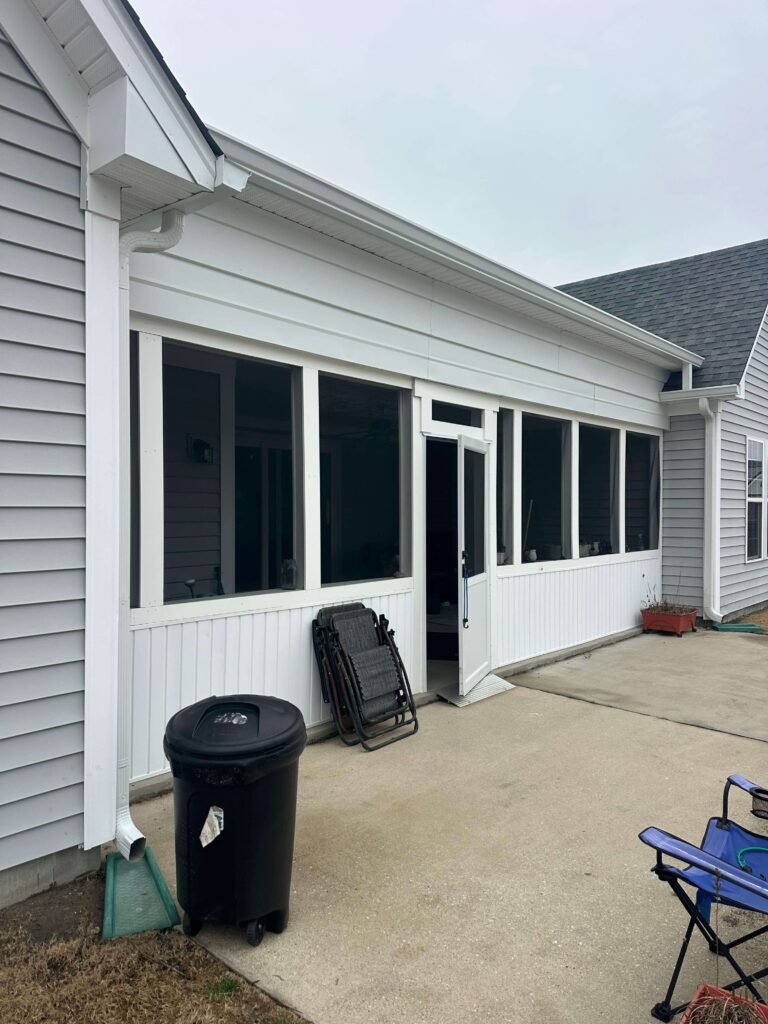
Why Seamless Aluminum Works So Well Here
We install seamless aluminum gutters on the majority of the homes we work on across Hampton Roads, and it’s not because it’s the flashiest option — it’s because it consistently holds up to what this climate actually throws at it, without the cost of copper or zinc.
- No rust, ever — it simply doesn't corrode the way steel does
- No seams along the run, which means no joints for salt spray and storm water to work into over time
- Custom-extruded on-site for a slope and fit matched exactly to your roofline
- Priced to make sense for most residential budgets, without the premium of copper or zinc
See what a proper seamless install looks like on our gutter installation and replacement page.
What Actually Determines How Long Your Gutters Last
Material is only part of the story. We’ve replaced aluminum gutters that failed in under 10 years because they were never cleaned, and we’ve seen well-maintained systems still going strong decades later. A few things matter as much as, or more than, the material itself:
- Regular cleaning — trapped debris holds moisture against the gutter and adds weight that stresses hangers and seams
- Correct slope — even the best material fails early if water sits instead of draining
- Gutter guards — reduce how often debris builds up in the first place, especially under pine trees or near marsh grasses
- Storm inspections — catching a loose hanger or small leak early prevents it from becoming a bigger repair
If you want to stretch the life of whatever material you choose, pairing it with gutter guards and filters and a regular gutter cleaning schedule makes a bigger difference than most homeowners expect.
Choosing the Right Material for Your Home
Seamless aluminum is likely right for you if:
- You want strong weather resistance without a premium price tag
- You're replacing gutters on a standard residential home
- You'd rather avoid the rust risk that comes with steel near the coast
Vinyl might make sense if:
- Budget is the primary concern
- The home is smaller with shorter gutter runs
- You're comfortable with a shorter expected lifespan
Copper or zinc are worth considering if:
- You own a historic home where the look matters
- Long-term cost per year matters more to you than upfront price
- You want a system that's genuinely built to outlast the house
Not sure which fits your home? A quick on-site look at your roofline, existing gutters, and budget usually makes the answer obvious — that’s what a free inspection is for.
Get a Free Gutter Inspection
Not sure if DIY or professional installation is right for your home? We’ll give you an honest read, free of charge.
Not Sure Which Gutter Material Is Right for Your Home?
We’ll walk your roofline, talk through your budget, and recommend the material that actually fits your home — no upsell, just a straight answer.
Serving Hampton, Virginia Beach, Norfolk, Chesapeake, Portsmouth & all of Hampton Roads, VA
One Response